Latest Research Paper: Climate games as invitations to care for the future
What does it take to move people from knowing about climate change to caring enough to act — and to imagine different futures together?
A new STRATEGIES‑supported study, Beyond awareness: Climate games as invitations to care for the future (Moossdorff & Vervoort, 2026), explores this question through the lens of games. Drawing on an analysis of 287 climate‑related games, the research shows how play can become a powerful space for practising care for the future.
This work directly contributes to STRATEGIES’ mission to understand how games and can build expand our collective imagination and support cultural responses to the climate crisis.
From Awareness to Care
Much climate communication still focuses on awareness: facts, models, and warnings. The authors argue this is not enough. Instead, they propose care as a richer framework for engagement. Care is understood not just as concern, but as:
· an affective state (feeling emotionally connected),
· an ethical obligation (feeling responsible),
· and a practical activity (doing things that maintain, repair, or protect the world).
Games are particularly well suited to this, because most gameplay already revolves around maintaining systems, responding to needs, and dealing with consequences over time.
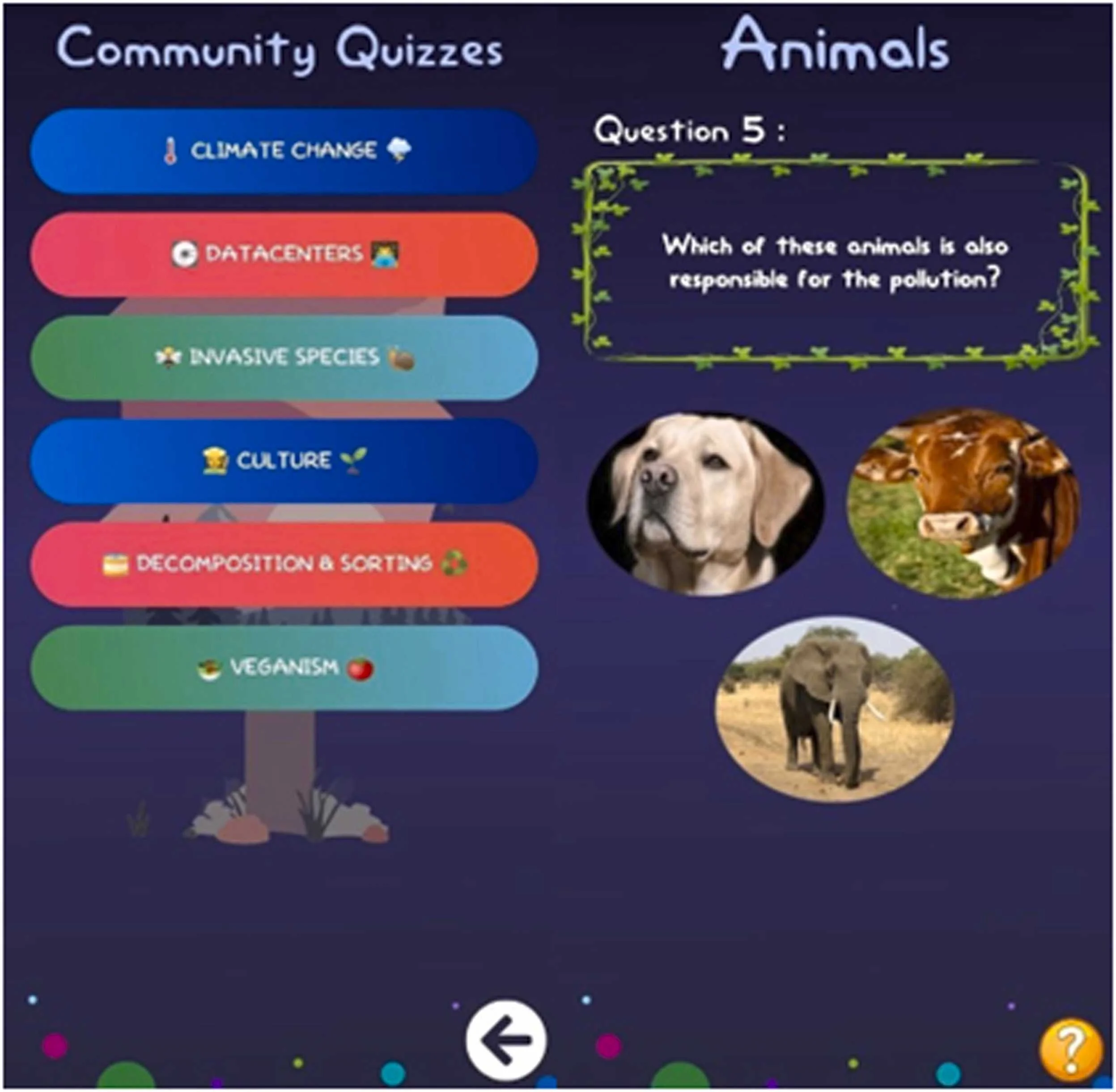
An example of a knowledge climate game. In ‘Environment Quiz’ players tap the correct answers to questions to gain points. Players can also make their own quizzes. (Barnaby Company)
Five Ways Games Invite Climate Care
The study identifies five types of climate games, each offering different invitations to care and different relationships to the future:
1. Casual games
Simple, accessible games (often mobile) that use climate as a theme or framing. They offer light, repetitive acts of care, reaching large audiences but with limited depth.
2. Knowledge games
Quiz‑ and puzzle‑based games that focus on climate facts. These build awareness and attentiveness but rarely allow players to practise meaningful action or imagine futures.
3. Systems management games
City builders and strategy games where players manage emissions, resources, and infrastructure over long time horizons. These games strongly support systems thinking and future‑oriented responsibility, but often abstract care into top‑down control.
4. Backdrop games
Games set in worlds after climate catastrophe. They can evoke strong emotions and attachment, but climate change itself is no longer something players can act on — care is redirected toward survival.
5. Experience games
Role‑playing games, live action games, and narrative experiences that foreground empathy, reflection, and shared meaning‑making. These offer the richest space for imagining alternative futures, though they are often small‑scale and less accessible.
Together, these categories reveal both what climate games already do well — and where significant design space remains under‑explored.
For STRATEGIES, this research provides a concrete analytical bridge between games, care, and futures literacy.