
STRATEGIES Hacking Toolkits
Playing with the Rules
Welcome to our Hacking Toolkits!
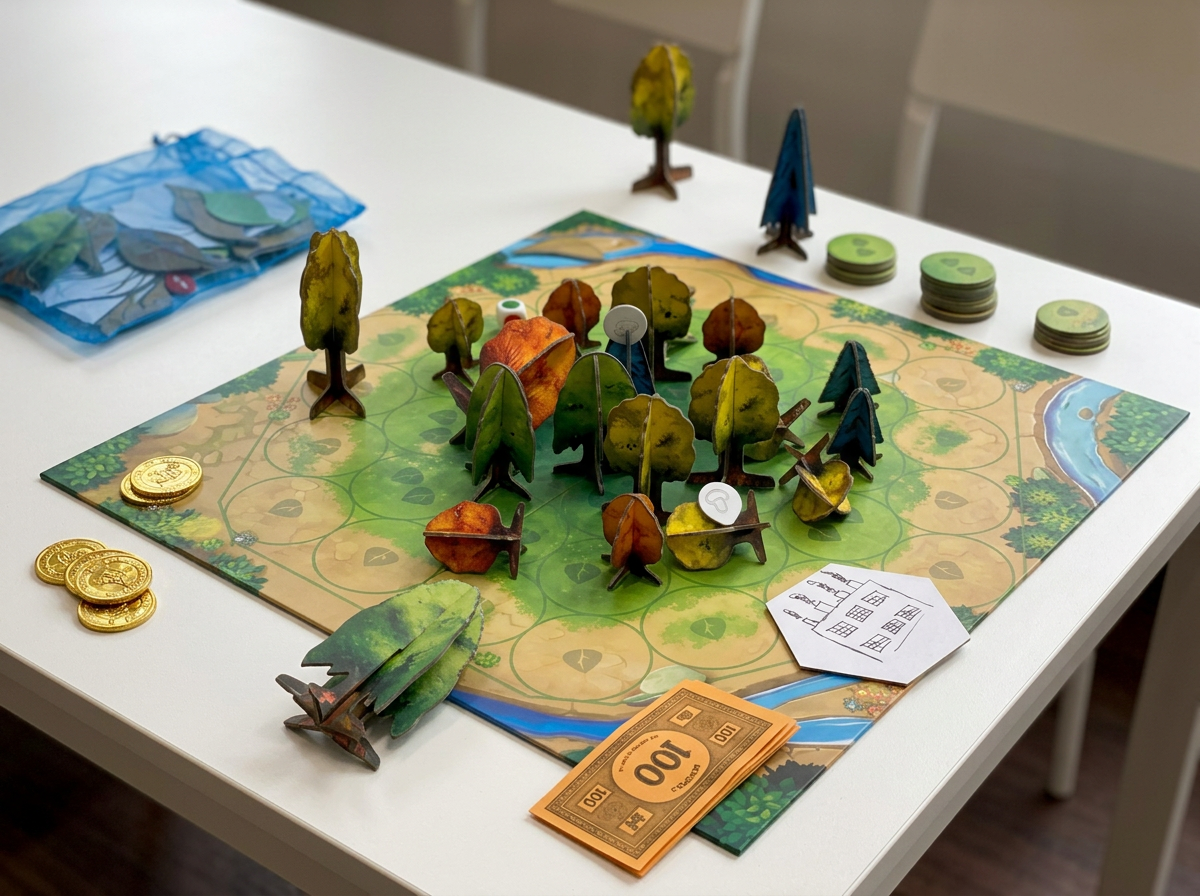
Hacking means taking a game that already exists and changing it. You might rewrite a rule, swap components, reimagine the resources, or transform the end goal of a game. Then you play again and see what changes.
At STRATEGIES we use hacking as a method for critical thinking and creative research. It helps designers, students and players see the values, narratives and assumptions that are built into a game, and helps us to imagine alternatives.
Hacking needs no new hardware, no new products and no programming skills. All you need is a game, some curiosity and a willingness to play with and break the rules!
This page explains why we hack games, how hacking works as both a design and learning method, and introduces two free toolkits to help you get started.
Why Hack Games?
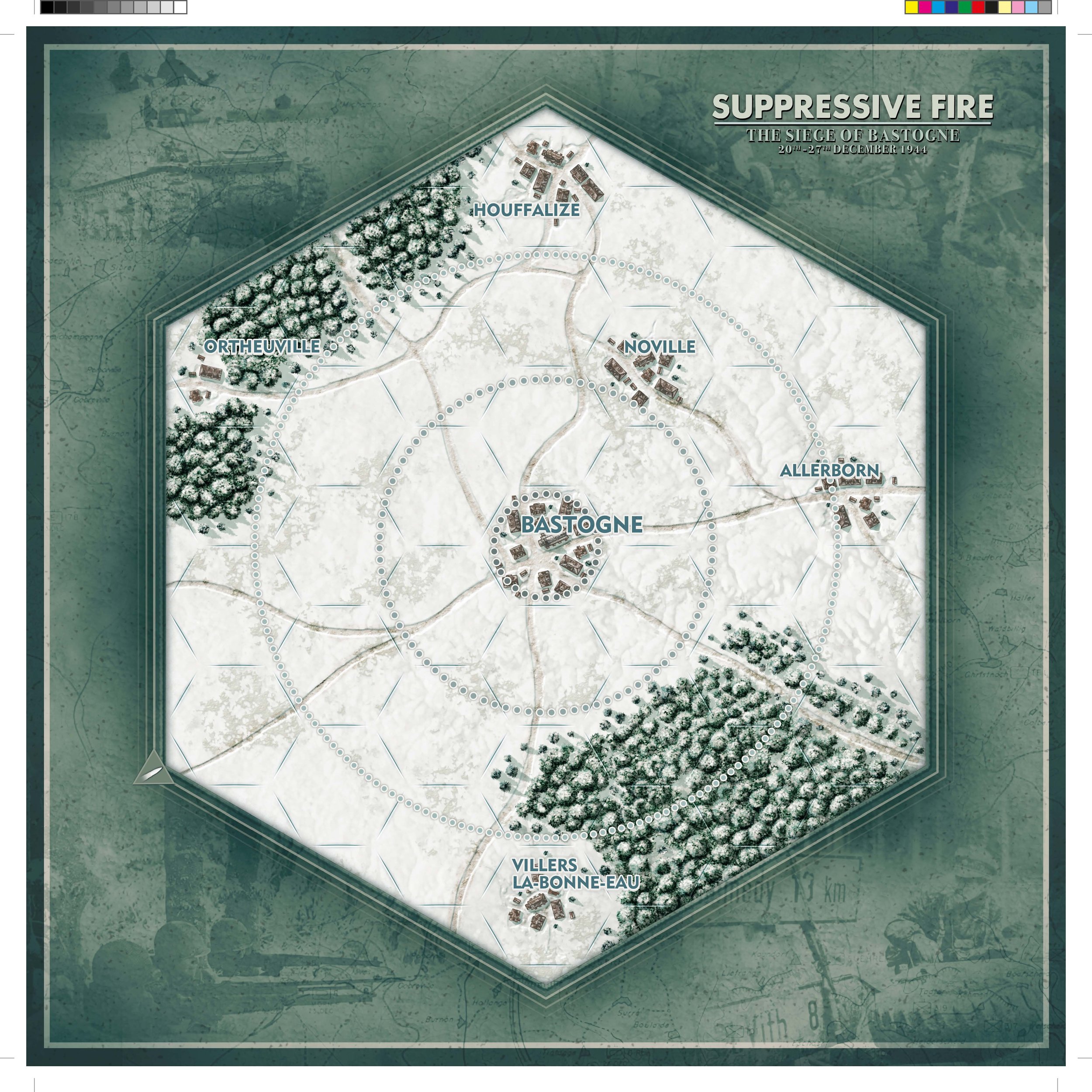
The reimagined game board for “Suppressive Fire” designed by Marc von Martial.
Games are never neutral. Their rules and stories carry assumptions about how the world works. These might include ideas such as competition is natural, that “natural” resources are there to be exploited, and that growth, or expansion, is always good. When we absorb these ideas through play, it can be difficult to notice their ideological character.
Hacking makes the ideologies and values in games visible. When you change a rule and play it again, the values built into the original design come into view. Hacking therefore works in two directions at once: it is a way of reading a game, and a way of speaking back to it.
Take Photosynthesis, a popular board game about growing trees that STRATEGIES researchers Paul and Chloé Wake hacked as a creative exercise. They kept every rule from the original game but replaced the forest with a Second World War battlefield. Seeds became scouts, trees became tanks and artillery, and the moving sun became a line of suppressive fire. The result, Suppressive Fire, worked perfectly as a wargame. Players said it felt “truer” to the game system than the ecological theme it replaced. The gentle nature theme had been hiding a game about scarcity, territory and domination.
Hacking for Sustainability and Critical Literacy
Our approach to hacking is grounded in critical literacy: the capacity to question power, examine dominant ideas and ideologies, and imagine alternatives. In our research for STRATEGIES we have found this critical matters for three reasons.
Games can model unsustainable worldviews. Many games reward extraction, accumulation and growth at all costs. Designers who cannot see these logics are likely to reproduce them.
Play has become consumption. Much of the games industry depends on selling new products, expansions and hardware. Hacking works with games we already have, favouring reuse and transformation over buying something new.
The climate crisis is also a crisis of imagination. Changing how games model resources, competition and cooperation is one way of practising different futures to the one set out by those with vested interest in the status quo.
Hacking for Ecogame Design
Hacking is a fast, low-cost way into game design. You start from a working game, make small changes, and immediately see how that change shifts meaning in play. There is no need to build a game from scratch.
Our hacking method has five stages:
Identify. Choose a game whose systems or themes you want to explore. Pick something that will provoke thought or debate.
Play without the rules. Explore the components freely: the board, tokens, cards and images. What kinds of play do they suggest?
Play by the rules. Now play the game as designed, and notice how its logic and mechanics work.
Play with the rules. Hack the game. Change a rule, a goal or the player count. Add, remove or rename elements. Swap the components, or replace them with players' own bodies, voices and movements. There is no wrong way to hack.
Critical reading. Reflect on what changed and why. What stories did the original game tell? What new ones emerged? What debates did your hack start?
Small hacks can have big effects. Flipping a win condition, reskinning a theme or adding a single new mechanic can be enough to transform what a game says. For designers, this practice helps build a valuable skill: understanding how mechanics carry meaning, and making deliberate choices about the values a game expresses.
Adapted from Germaine & Wake, Imagining the Future: Game Hacking and Youth Climate Action (2024).
Hacking for Education
Hacking is a flexible learning and teaching method. It works in a single workshop, a short design sprint or as part of a full course or module. The hacking method also suits learners with any level of design experience. We have used it with undergraduate and postgraduate students, researchers, young people, game fans and members of the public, from university classrooms to sessions at the UK Games Expo.
Hacking supports learning in four ways:
It makes systems visible. Changing a rule shows learners how games model the world, and opens those models to discussion.
It values reuse over consumption. Learners work with games and materials that already exist, rather than producing new products.
It builds critique into design. Learners do not just analyse a game; they intervene in it and test their ideas through play.
It welcomes open outcomes. Hacking does not demand a polished final product. Reflection on what was changed, and why, is where much of the learning happens.
These are skills the games industry increasingly needs. To improve ecogame design in support of sustainability goals, we need designers who can think critically, collaborate, and build ethical and sustainability concerns into their work.
Hacking Responsibly
Hacking can raise difficult themes, and educators should plan for this. Set clear ground rules, use tabletop safety tools, and let participants step back if they need to. Respect the intellectual property of original creators by keeping hacks non-commercial, and treat participants' own designs as their work: ask before sharing them. Our guiding principle is simple: hacking should empower learners to critique systems and ideologies, not replicate harms.
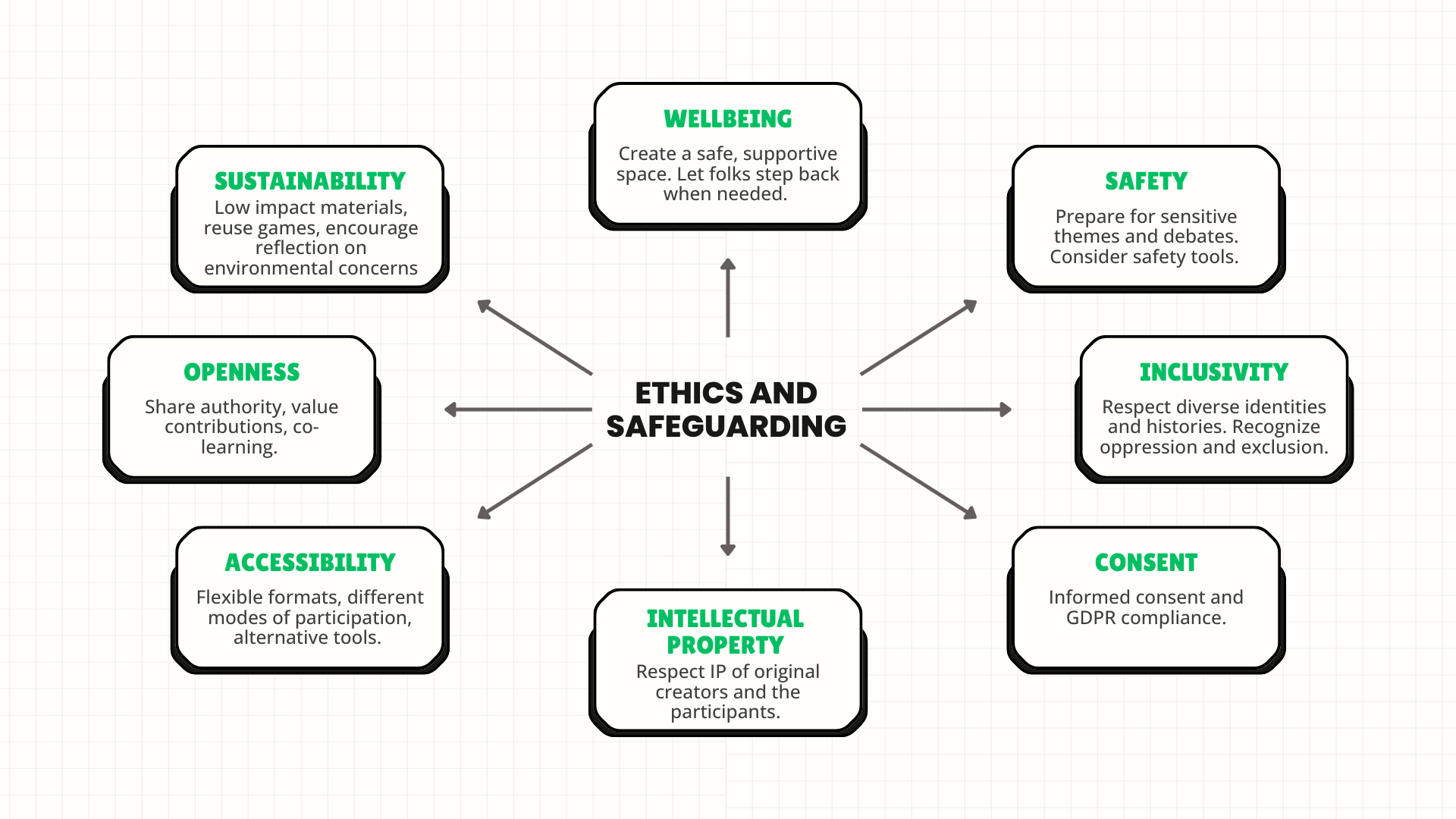
For case studies, assessment ideas and full guidance on ethics and safeguarding, read our Game Hacking Education Report.
Get Started with our Toolkits
We have created two free toolkits to help you put hacking into practice.
Ecogame Hacking Toolkit - Hack and remake board games in a virtual tabletop
This toolkit is a library of free 3D game pieces with environmental themes, from butterflies and mermaids to power plants, airships and weather tokens. Use them to reskin an existing board game, prototype a counter-mechanic, or test a hack with players online.
The assets were created by Games Art graduates from Manchester Metropolitan University, and the toolkit was made with STRATEGIES partner Plasticity Studios, developers of the virtual tabletop Tabletop Playground. The files also work with other simulators such as Tabletopia and Tabletop Simulator. All assets are free to use and adapt for non-commercial purposes.
Best for - hacking board games online, remote or hybrid teaching, and groups without access to physical game components.
Explore the Ecogame Hacking Toolkit →
Franchise Hacking Toolkit - Use a game players already know to explore climate and sustainability
Franchise hacking uses the familiar rules and card language of a popular game, in this case Magic: The Gathering, as a starting point for critical design. Because many participants already know how the game works, they can move quickly from playing to designing. Developed with the Utrecht Game Lab, the method has been used in workshops at Utrecht University, the Manchester Game Centre and UK Games Expo.
Participants have designed new cards that respond to local and global environmental issues, such as Concrete Slab, which models urban land being slowly paved over, and Doom-Scroll, a satirical card about information overload. One group even invented a new keyword, “pollute”, to explore how environmental harm spreads through a system.
Best for - workshops with game fans, short sessions where time is limited, and exploring how commercial franchises shape our ideas about nature.
Explore the Franchise Hacking Toolkit →
Get involved!
Have you used one of our toolkits, hacked a game in your teaching, or want to contribute to the asset library? We'd love to hear from you. Email info@strategieshorizon.eu with your stories, feedback and suggestions.