
Virtual Reality for Environmental Sustainability: A Report
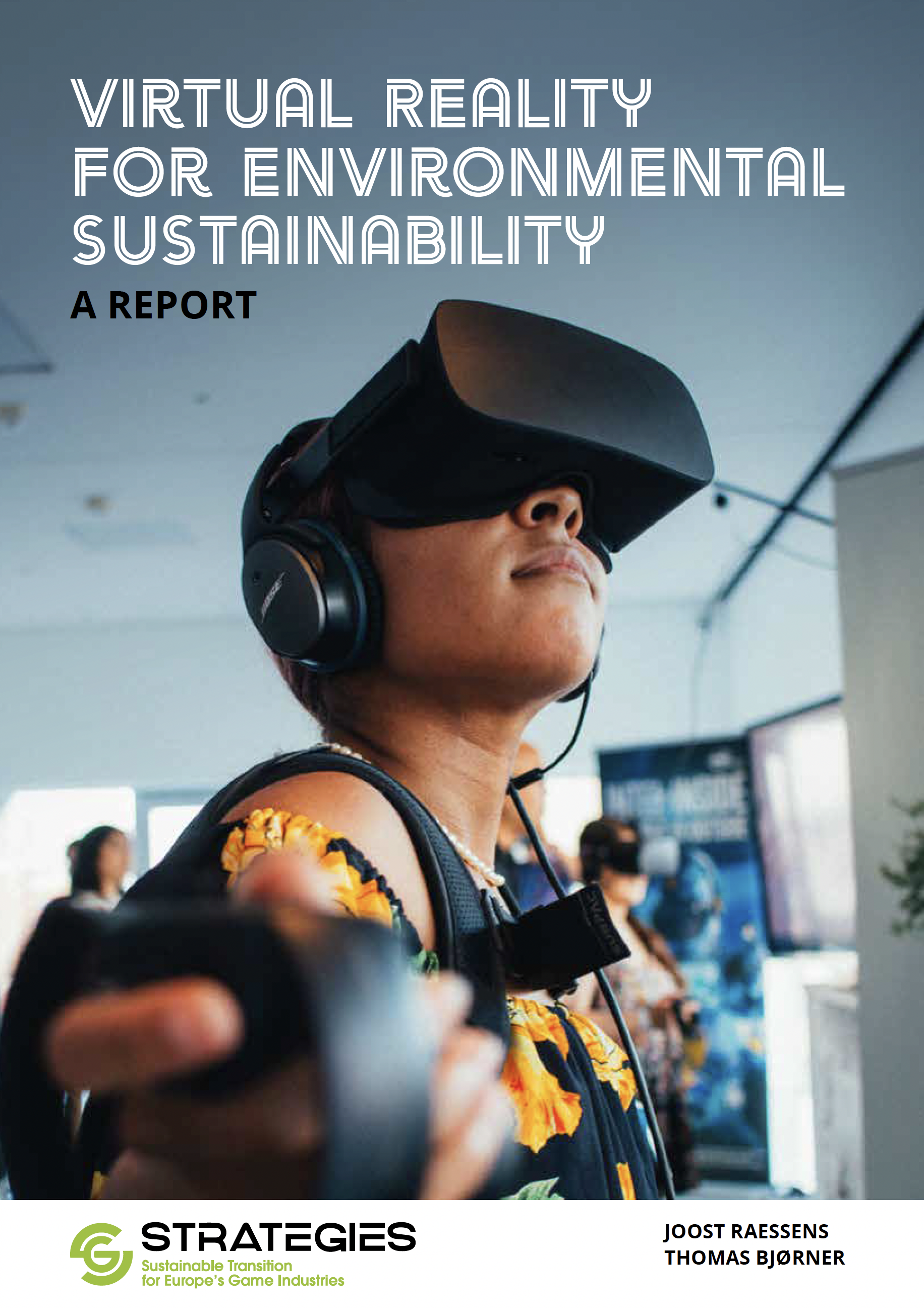
Authors: Professor Joost Raessens and Professor Thomas Bjørner
V1.2 Published 2nd April, 2026
Virtual reality has emerged as an engaging medium for environmental education, public engagement, and imaginative worldbuilding. This report maps the global landscape of VR experiences and institutions working at the intersection of immersive technology and sustainability. It provides a historical and conceptual overview of VR, along with a catalogue of 79 sustainability‑focused VR experiences, ranging from ocean acidification and coral reef decline to rainforest preservation, biodiversity loss, planetary perspectives inspired by the ‘overview effect’, environmental justice, and the interdependence of human life with the broader non-human world, including animals, plants, and ecosystems.
The report offers insights into how VR can support environmental literacy, behaviour change, and systems thinking. However, it does not overlook the tensions involved in adapting technological innovation for sustainability-oriented action. It includes a critical discussion of barriers to using VR for sustainability, including methodological challenges, the so-called ‘defining’ characteristics of VR, issues of access to VR experiences, and the environmental impacts of VR technologies themselves.
This report demonstrates how VR can help learners and audiences understand environmental issues at emotional, experiential, and conceptual levels, while also offering guidance for socially and ecologically responsible use. Addressing these issues requires collaboration between researchers, industry practitioners, educators, cultural institutions, and policymakers. We therefore encourage readers of this report to get in touch with us to discuss this further.